
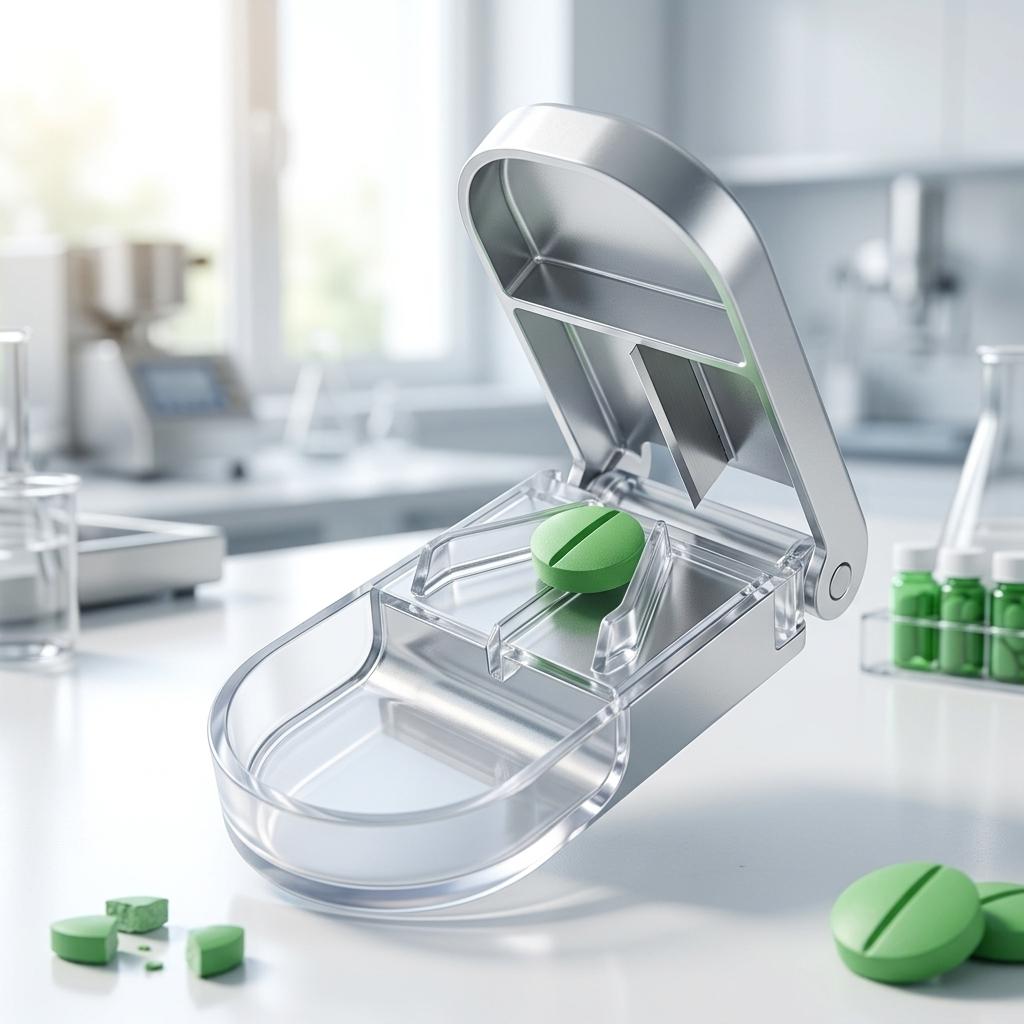
As an independent reviewer, I deeply understand the importance of precise dosage when taking medication. Especially for drugs with specific effects, such as products designed to enhance "stamina" performance, their efficacy and safety are often closely tied to accurate dose control. Today, let's discuss a seemingly insignificant yet crucial tool—the pill cutter—and its role in daily medication use, particularly for "stamina"-related needs.
We will primarily explore the common types of pill cutters available on the market, focusing on multifunctional products like the pill cutter splitter one-half pill divider tool quarter cutter pill box portable. Combining common questions about "stamina" medication, we will analyze aspects such as cutting precision, portability, and material safety. Our goal is to help you find the most suitable medication aid, making each dose safer and more effective.
Common Questions and Professional Answers
#### Q1: Why do I need a pill cutter? Can't I just break it by hand or cut it with a knife?
Many medications, especially high-dose tablets or prescription drugs requiring personalized dose adjustments, need precise splitting. Breaking pills by hand often results in uneven fragments and uneven distribution of active ingredients, potentially leading to overdosing or underdosing, affecting efficacy, or even causing side effects. For example, certain oral medications used to enhance "stamina" performance often require dose adjustments based on individual response. Inaccurate splitting can lead to poor results at best or increased discomfort at worst.
Professional pill cutters, such as the pill cutting tool, are designed with fixed slots and sharp blades to ensure pills are split evenly and accurately, preserving the pill's integrity and uniform distribution of active ingredients. This is especially critical for medications requiring fine dose management.
#### Q2: What are the differences between the various types of pill cutters on the market? How should I choose?
Pill cutters are not all the same; they differ in design, function, and application scenarios. Below, we compare several common types:
* Basic Blade Pill Cutter
* Advantages: Simple structure, usually lower price, sharp cutting blade, capable of basic half or quarter cuts. Works well for regular-shaped pills like round or oval ones. Operation is intuitive and easy to use.
* Disadvantages: Single function, no storage capability. Cutting precision may be affected for irregularly shaped or hard-coated pills. Some products have limited blade life and require periodic replacement. Pill fragments may scatter after cutting, making collection inconvenient.
* Multifunctional Pill Cutter (with grinding/storage function)
* Advantages: Besides cutting, it often integrates pill grinding or a small pill box storage function, such as the pill cutter splitter one-half pill divider tool quarter cutter pill box portable. The grinding function is suitable for those with swallowing difficulties or who need to mix medication with food. The built-in storage compartment is convenient for carrying split pills, preventing moisture or contamination, especially for travel or outings. Its design often focuses more on user experience and portability.
* Disadvantages: More functions may mean slightly larger size and higher price. The grinding function may not be suitable for certain extended-release or enteric-coated medications, as it can destroy their special release mechanism.
* Specialized Pill Cutter (for specific pill shapes)
* Advantages: Optimized for special shapes like heart-shaped or triangular pills, providing better pill fixation, improving cutting precision and safety. These products often focus on details to prevent pill slippage.
* Disadvantages: Narrow scope of application, not very versatile. If you don't regularly take specifically shaped medications, purchasing such a cutter may not be cost-effective.
Selection Advice: If you only occasionally need to cut regular pills, a basic blade cutter is sufficient. However, if you frequently cut pills, need to carry and store them, or require grinding, then a multifunctional product like the pill cutter splitter one-half pill divider tool quarter cutter pill box portable is a better choice. It balances practicality and portability, making it a very useful item in the gift series.
#### Q3: How can I ensure cutting accuracy and avoid fluctuations in drug efficacy?
Several key points ensure cutting accuracy:
1. Choose the Right Pill Cutter: Prioritize cutters with sharp blades and well-designed pill fixing slots. The fixing slot effectively prevents pill slippage and is the foundation for cutting precision.
2. Place the Pill Correctly: Center the pill in the fixing slot, ensuring the cutting line aligns with the pill's score line (if present).
3. Apply Even Pressure: Press the blade down smoothly and evenly, avoiding sudden force or tilting to reduce the risk of pill breakage or uneven cuts.
4. Check the Cut: After each cut, check if the pill is even and if there is excessive debris. If the cut is poor, you may need to replace the cutter or adjust your technique.
For medications requiring long-term use and fine dose adjustments, such as some oral regimens for improving "stamina" issues, precise splitting helps you find your minimum effective dose, maximizing efficacy while minimizing side effects.
#### Q4: What special significance does a pill cutter have for "stamina" medications?
For "stamina" medications, such as certain oral preparations, dosage is often a key factor affecting efficacy and side effects. Many users try starting with half or even a quarter of a pill to find their optimal starting or maintenance dose. In this case, a precise pill cutting tool becomes especially important.
* Personalized Dosing: Helps users achieve personalized dose adjustments, avoiding excessive intake at once and reducing risks.
* Cost Control: Higher-dose pills are often more cost-effective per pill than lower-dose ones. Precise cutting allows you to split one pill into multiple doses, effectively reducing the cost per use.
* Side Effect Management: Accurate dosing helps reduce unnecessary side effects. For example, some medications may cause headaches or flushing at higher doses, which can be alleviated by precise dose reduction.
Of course, besides oral medications, there are other auxiliary products that can help enhance "stamina" performance, such as stamina wipes and stamina condoms. These products typically don't require cutting, but understanding their correct use and effectiveness evaluation is also an important part of achieving the desired "stamina" results. If you want to learn more about the specific effects of wipes, you can refer to this wipe effect review article.
#### Q5: What are the considerations for storing and carrying cut pills?
Once a pill is cut, its exposed surface area increases, making it more susceptible to moisture, oxidation, or contamination, which can affect efficacy or even produce harmful substances. Therefore, cut pills should be taken as soon as possible. If carrying is necessary, store them properly.
* Sealed Storage: Use a small pill box with individual sealed compartments, like the one included with the pill cutter splitter one-half pill divider tool quarter cutter pill box portable, to effectively isolate air and moisture.
* Light and Moisture Protection: Avoid exposing pills to direct sunlight or humid environments, especially places like bathrooms. Some medications are light-sensitive; storing them in the dark maintains stability.
* Clear Labeling: If carrying multiple types of pills, clearly label the compartments to avoid confusion, especially for "stamina" medications that need strict differentiation.
* Short-Term Carrying: It is recommended to carry only a short-term supply (e.g., 1-2 days) to minimize the risk of storing split pills for extended periods.
For more professional knowledge on medication use and storage, refer to articles like the stamina guide for comprehensive advice.
Myth Clarification and Safety Reminders
Myth 1: All pills can be cut.
Clarification: Not all pills are suitable for cutting. Extended-release tablets, enteric-coated tablets, capsules, sugar-coated pills, chewable tablets, and certain medications with special dosage forms are generally not recommended for cutting or grinding. Cutting can destroy their special coating or structure, affecting drug release rate and absorption site, potentially leading to excessive potency, inefficacy, or even toxicity. Before cutting any medication, carefully read the drug leaflet or consult a pharmacist or doctor.
Myth 2: The sharper the blade, the better; material doesn't matter.
Clarification: While blade sharpness is important, material stability and safety are equally crucial. High-quality pill cutters typically use food-grade stainless steel blades and eco-friendly ABS/PP plastic materials, ensuring no harmful substances are produced during cutting and no rust contaminates the pills. Low-quality blades may become dull over time, leading to uneven cuts or pill breakage, and may even pose a risk of detachment.
Safety Reminders:
1. Keep Away from Children: Pill cutter blades are sharp; store them out of reach of children to prevent accidental injury.
2. Cleaning and Maintenance: Clean the pill cutter after each use to remove pill debris, rinse with water, and dry. Regularly check the blade for rust or dullness and replace it promptly to ensure hygiene and cutting performance.
3. Follow Medical Advice: Any medication, including "stamina" products, should be used under the guidance of a doctor or pharmacist. A pill cutter is just an auxiliary tool and cannot replace professional medical advice.
Conclusion and Recommendations
Choosing a suitable pill cutter is an important step in improving medication safety and efficacy for those requiring fine dose management. Especially for "stamina" medications, precise dose control helps users manage potential side effects while pursuing effectiveness, achieving a personalized medication experience.
* For Ultimate Precision and Multifunctionality: Recommend products like the pill cutter splitter one-half pill divider tool quarter cutter pill box portable. It integrates cutting, splitting, and storage functions with safe, reliable materials, ideal for users needing long-term, precise medication use and portability. For frequent travelers, the pill box function is particularly useful for protecting split pills.
* For Cost-Effectiveness and Basic Cutting: If you only occasionally need to split regular pills in half and have no strict storage requirements, a basic blade pill cutter will suffice. However, still pay attention to blade material and fixing slot design to ensure cutting precision.
Regardless of the pill cutter chosen, the core principle remains: Safe medication, precise control. We hope today's analysis helps you feel more secure and composed on your medication journey.