
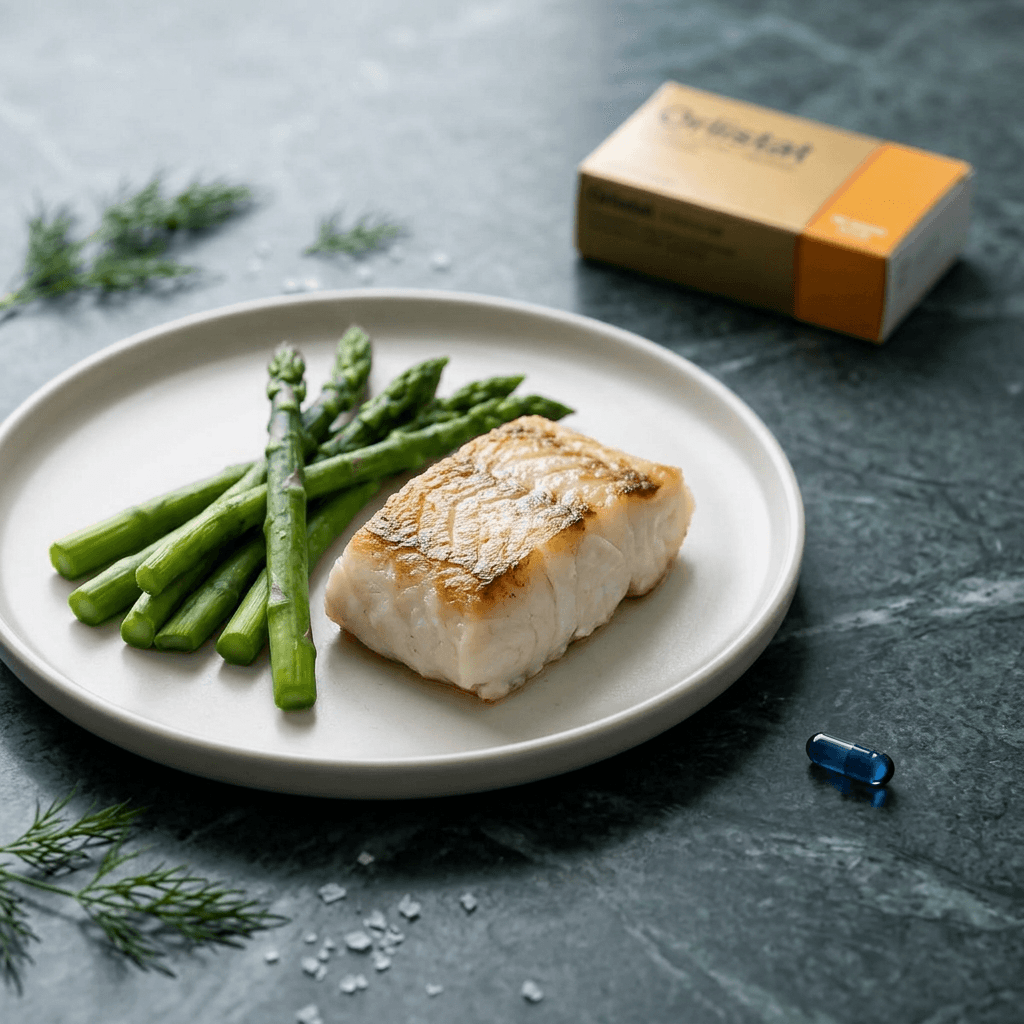
Health InformationRead time9 min

How should Orlistat fat-blocking pills be taken to be effective? A pharmacist's in-depth analysis of the fat-reduction and oil-blocking mechanism

How should Orlistat fat-blocking pills be taken to be effective? A pharmacist's in-depth analysis of the fat-reduction and oil-blocking mechanism

TL;DR

Orlistat reduces dietary fat absorption by approximately 30% by inhibiting lipase. It is recommended to take 120 mg with each main meal, paired with a low-fat diet to avoid side effects such as diarrhea.

Key Takeaways

1

奥利司他通过阻断脂肪酶活性减少脂肪吸收,并非直接燃烧脂肪。

2

服用奥利司他必须随餐或餐后一小时内进行,且需严格控制每日油脂摄入量。

3

长期服用奥利司他可能影响脂溶性维生素吸收,建议额外补充复合维生素。

4

慢性吸收不良及胆汁淤积患者禁止使用此类减脂药物。

5

减脂药物不能替代运动,合理的饮食结构调整是体重管理的核心。

In my daily medication consultations, I often encounter consumers who want to use Orlistat for rapid weight loss. Many people assume that once they take the pill, they can indulge in rich, fatty meals without consequence—only to end up with severe gastrointestinal reactions and come back asking me if they bought counterfeit products. Today, let's start from the pharmacological mechanism and discuss how this fat-blocking, oil-expelling medication should actually be used.

Orlistat is a specific, reversible, long-acting lipase inhibitor. In simple terms, when our intestines digest fat, they need a tool called "lipase" to break down large fat molecules into smaller ones that the body can absorb. When Orlistat enters the gastrointestinal tract, it binds to lipase and renders it inactive. It's like planting a "security inspector" in your intestines that directly blocks about 30% of dietary fat from being absorbed. The unabsorbed fat is then excreted in the stool—this is what people commonly refer to as the "oil expulsion" phenomenon.

When it comes to usage, many people get it wrong. The correct approach is:

1. Dosage: The recommended adult dose is 120mg per dose, three times daily.
2. Timing: It must be taken with meals, or within one hour after a meal. If the meal contains almost no fat—for example, just a bowl of plain noodle soup—then there's no need to take the medication.
3. Dietary coordination: This is the most important point—it must be combined with a low-fat diet. If you consume too much fat, the amount of oil expelled by the medication will multiply, leading to severe oily stools, steatorrhea, and even fecal incontinence.

During use, if you have additional concerns about men's health—such as wanting to boost vitality while losing fat—you might come across products like German Black Ant on the market. However, please be aware that fat loss and sexual vitality enhancement are two completely different physiological needs, with entirely different medication logic. If you're dealing with ED (erectile dysfunction), I recommend reviewing the information on Cialis Dual Action, or referring to this male comparison for a deeper understanding.

Regarding safety warnings, I must remind everyone:

  • Contraindicated groups: Patients with chronic malabsorption syndrome or cholestasis should not use this medication. If you are allergic to any component of Orlistat, it is absolutely off-limits.

  • Nutritional supplementation: Since the drug blocks fat absorption, the absorption of fat-soluble vitamins (such as vitamins A, D, E, and K) is also affected. For long-term users, it's recommended to take a multivitamin supplement before bedtime or between meals.

  • Side effects: Common ones include oily spotting, increased flatulence, and a sudden urge to defecate. If you experience severe abdominal pain, yellowing of the skin, or dark urine, stop taking the medication immediately and seek medical attention.
  • When choosing a product, I suggest reviewing this detailed safety guide for more information on usage details. There are no shortcuts to weight loss—medication is only an auxiliary tool, and the key lies in long-term dietary adjustments and consistent exercise habits. If you experience any discomfort while taking the medication, consult a professional physician or pharmacist promptly, and never blindly increase the dosage.

    FAQ

    Q: Is it normal to pass oil after taking Orlistat weight loss pills?

    This is a normal manifestation of the drug taking effect. Because the drug blocks part of the absorption of fat, unabsorbed fat is excreted with the stool, appearing as oil stains or oily stools. If the amount of oil excreted is excessive and causes trouble in daily life, it indicates that your diet contains too much fat, and it is recommended to reduce oil intake.

    Q: Can I take Orlistat when I am not eating?

    No, you cannot. Orlistat mainly targets fat in the diet. If the meal does not contain fat, the drug cannot work and only unnecessarily increases the burden on the gastrointestinal tract. Please be sure to take it during a meal containing fat or within one hour after a meal.

    Q: Will long-term use of Orlistat harm the body?

    Orlistat mainly acts locally in the gastrointestinal tract and does not enter the bloodstream, so its safety profile is relatively good. However, long-term use requires vigilance against deficiency of fat-soluble vitamins. It is recommended to take it under the guidance of a pharmacist and regularly monitor your physical condition. If abnormal liver function or severe gastrointestinal reactions occur, stop taking the drug immediately.

    Q: Can Orlistat be taken together with weight loss tea?

    It is not recommended to combine them arbitrarily. The ingredients of weight loss tea are complex and may contain laxative components. Combining them with Orlistat will increase gastrointestinal irritation, leading to diarrhea, dehydration, or electrolyte imbalance. Medication should follow the principle of single use. If you have weight loss needs, please consult a professional doctor.

    Q: Will weight rebound after stopping the drug?

    If you resume a high-calorie, high-fat diet after stopping the drug, weight regain is inevitable. The drug is an auxiliary tool. The fundamental way to lose weight is to establish long-term healthy eating habits and exercise habits. After stopping the drug, maintaining a healthy lifestyle is the key to preventing regain.

    Was this article helpful?

    Your feedback helps us provide better health information.